1304-1318 King St. W. & 143-145 Cowan Ave. – Virtual Community Consultation Meeting – Mar. 26
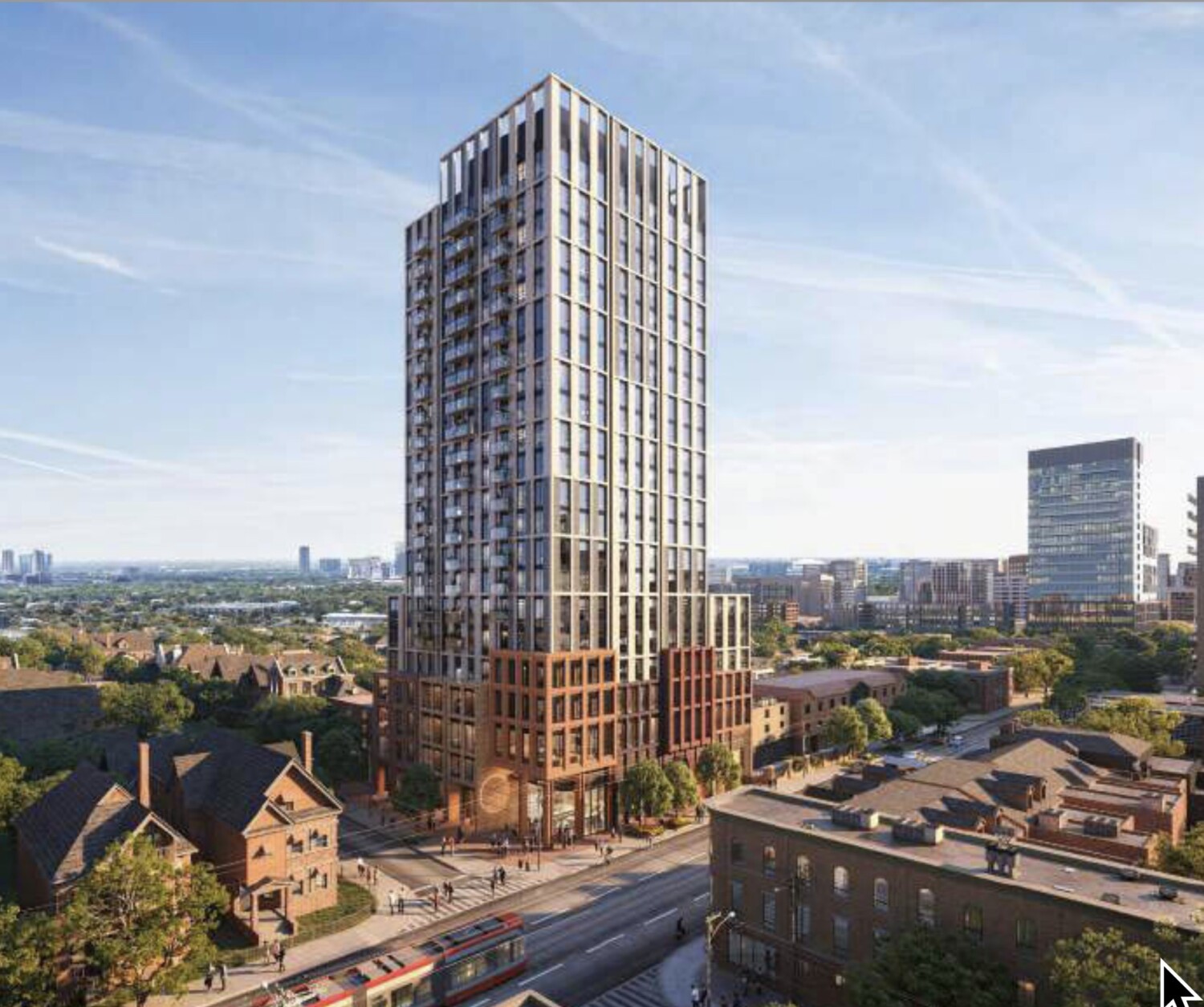
The proposed development at the northeast corner of King and Cowan for a 21-storey mixed-use development containing 263 condo dwelling units and 213 square metres of ground floor retail. The applicant KingSett Capital requests an Official Plan redesignation from Neighbourhoods to Mixed Use Areas and amend the Official Plan and Zoning By-law to accommodate this proposal.
Date: Tuesday, March 26th, 2024
Time: 6 PM – 8 PM
KingSett Capital development application to the City (1304-1318 King Street West and 143-145 Cowan Avenue) – Register on WebEx https://toronto.webex.com/weblink/register/r99782820016aa1fa98a505233386f23
Community Skate at Coca-Cola Coliseum
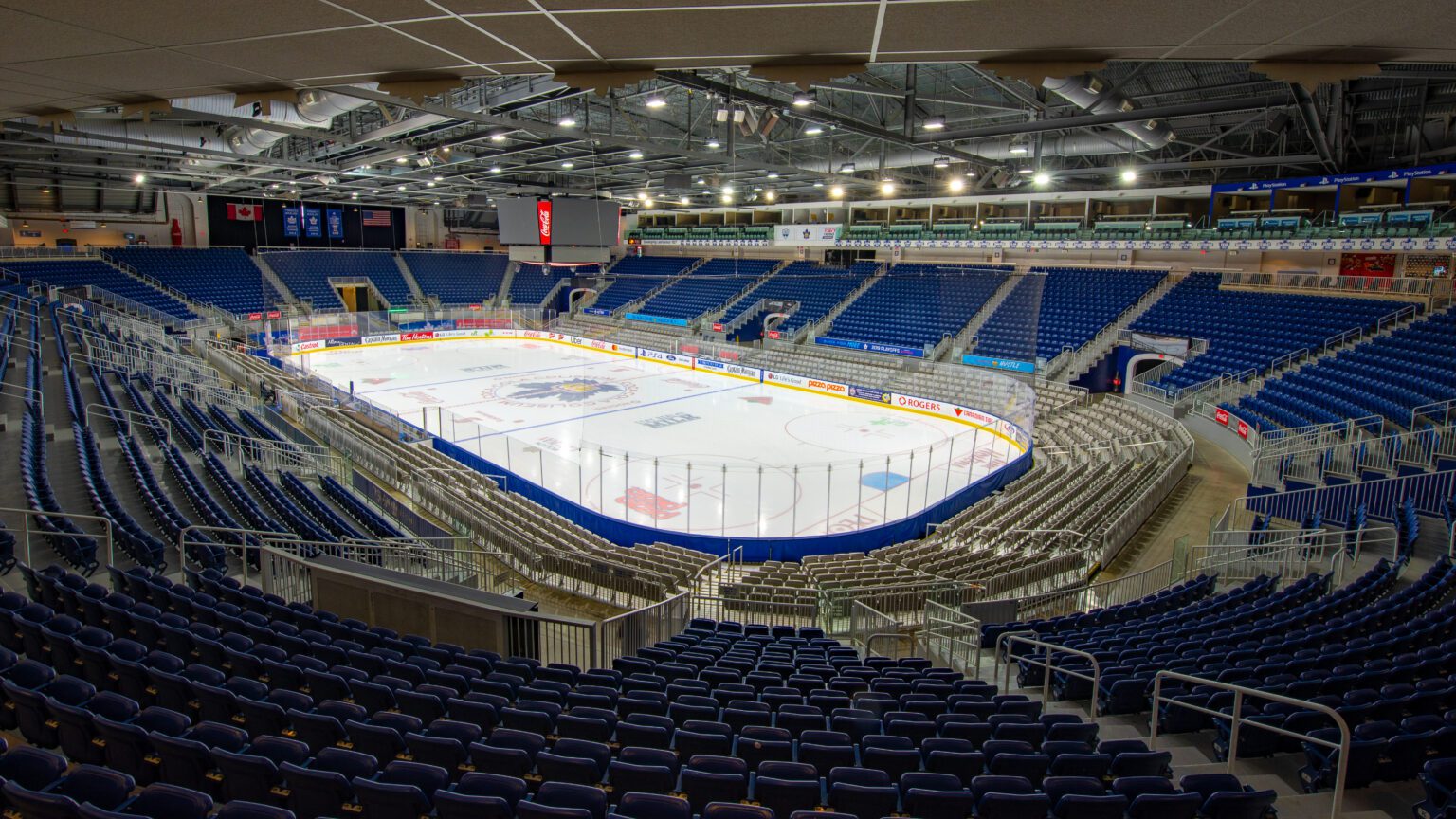
Exhibition Place invites the local community for leisure skating at the Coca-Cola Coliseum from March 8 to 10.
No skates no problem! The City of Toronto has organized a Skate Lending Library at the Coliseum on March 9 and 10, from 1 PM to 5 PM.
Leisure Skate (All Ages):
Friday, March 8th: 2 PM- 5 PM
Saturday, March 9th: 1 PM – 5 PM
Sunday, March 10th: 10 AM – 1 PM
Leisure Skate (Youth):
Sunday, March 10th: 2 PM- 5 PM
Shinny Tournament (50+):
Additionally, there will be a shinny tournament for those aged 50 and above. This provides an opportunity to play hockey on the same rink and experience the thrill of playing right in the home of the Toronto Marlies. To participate, register as an individual or team here.
Friday, March 8th: 10 AM – 2 PM
Vacant Home Tax – Feb. 29 Deadline

The City’s vacant home tax (VHT) charges owners who leave their properties vacant for more than six months in a calendar year. Property owners in Toronto classified within the residential property tax class must declare their occupancy status yearly. The deadline to declare is February 29, 2024. You can use this online form: https://www.toronto.ca/services-payments/property-taxes-utilities/vacant-home-tax/vacant-home-tax-notice-of-complaint/
Action Plan for Toronto’s Culture Sector
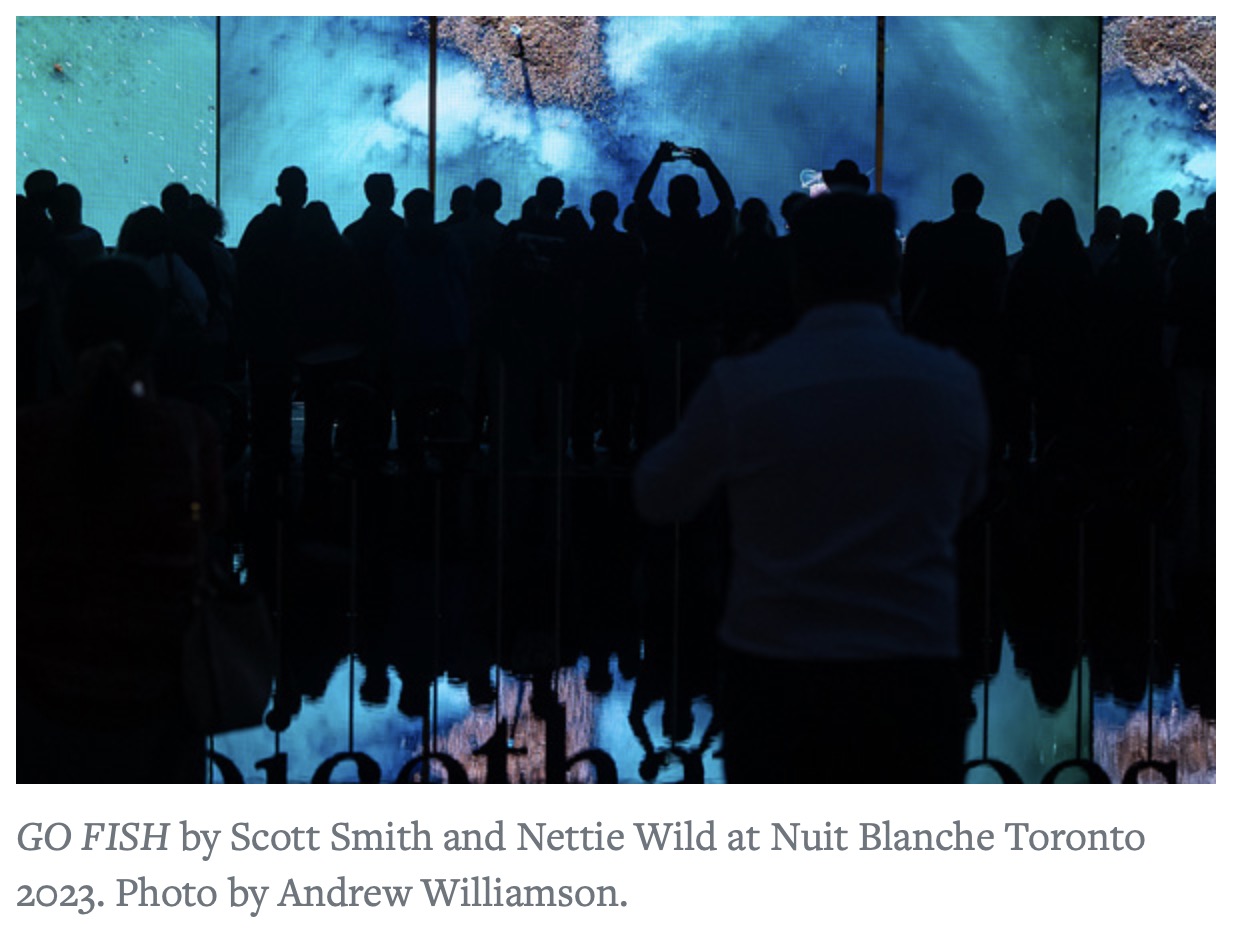
Your opinion matters. Get involved and help shape the future of arts, culture and creative industries in Toronto. Help shape the future of arts and culture in Toronto by taking an online survey or registering to participate in a virtual town hall on February 15th or 22nd.
The City of Toronto is developing a new Action Plan for Toronto’s Culture Sector, to guide cultural services, policy and programming over the next ten years. The previous culture plan, Creative Capital Gains, was adopted in 2011 and has guided cultural policy and programming since then. The new Action Plan will set out an ambitious vision to strengthen Toronto’s cultural sector, which prioritizes equity, and ensures that residents in all corners of the city have opportunities to engage with the arts. It will provide recommendations for the sector including arts and culture, museums and cultural heritage, and the film and entertainment industries.
Happy New Year Parkdalians!
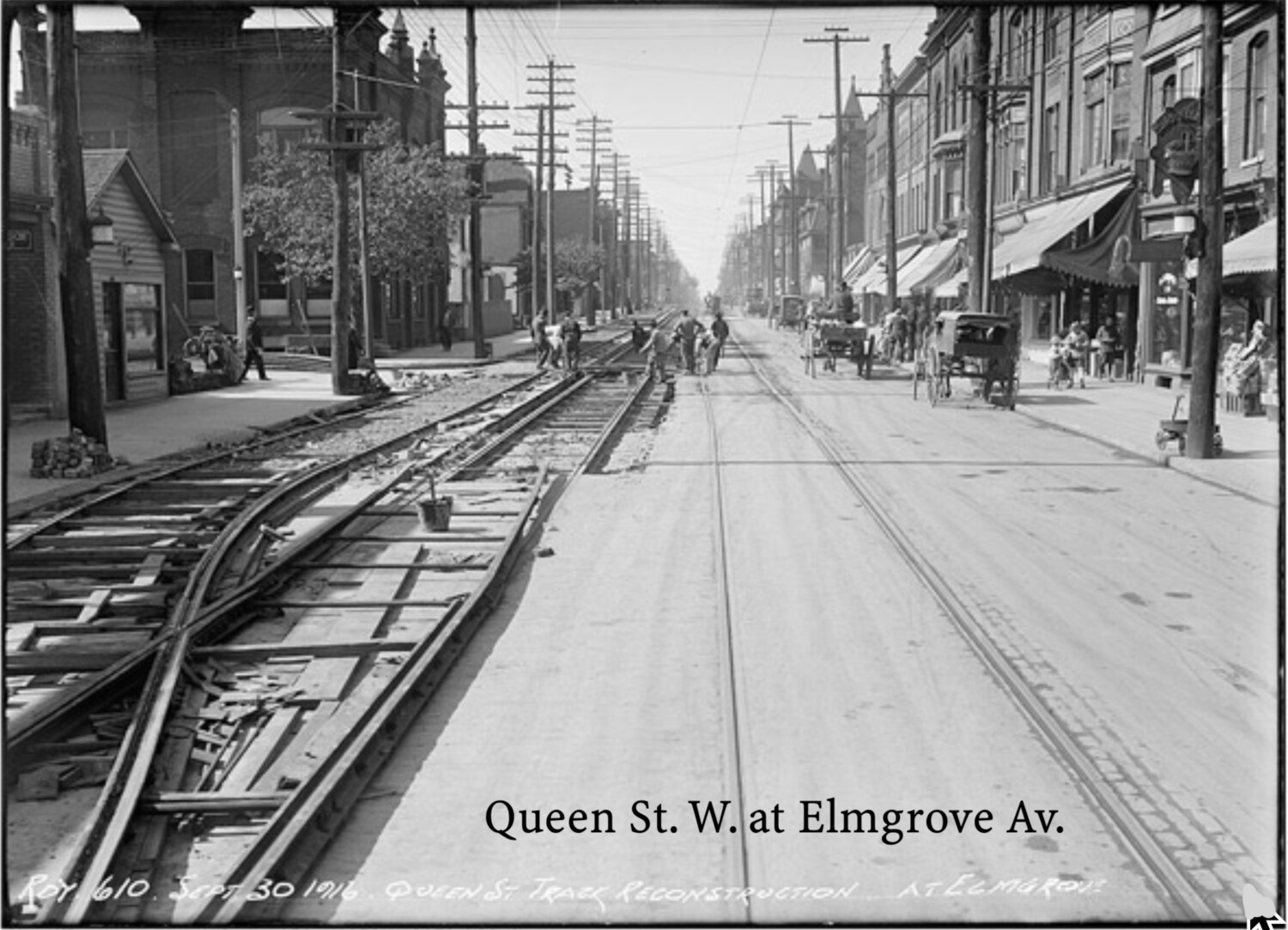
Dear Parkdalians,
As we approach the end of 2023, the Parkdale Residents Association (PRA) would like to express our deepest gratitude for your support throughout the year. Your dedication to our community has made a significant impact, and as we stand on the cusp of a new year, we extend our warmest wishes to you and your loved ones for a safe and joyous 2024.
We encourage you to continue the spirit of generosity that defines our community. Whether through donating non-perishable goods, volunteering your time, or performing acts of kindness, your contributions make Parkdale a better place for everyone.
In the spirit of fostering community engagement, the Parkdale Residents Association is actively seeking new members from within Parkdale. If you are a resident, whether a renter or owner, your voice is crucial in addressing issues that impact our beloved neighbourhood. To learn more and express your interest, please email us at info@parkdale.to.
As we reflect on the past year, we are proud to share some of the highlights that have strengthened and helped build community:
- PRA celebrated the ARTS in Parkdale by holding the ‘Parkdale Art Thing’ event in September with 56 vendors, 8 performers and 1,500 attendees
- Parkdale Hub project (Queen W. & Cowan) continuing discussions & meetings
- Worked at securing artists and cultural spaces in the area
- West Queen West Area Study – OPA 445 (Bathurst to Roncy) approved by Province
- Parkdale Main Street Heritage Conservation District (HCD) finalized and appealed to the Ontario Land Tribunal (OLT)
- New condo/rental developments are moving into Parkdale at an increasing pace and we continue to monitor and engage with both the City and the developers
- King-Queen-Queensway-Roncesvalles (KQQR) intersection finally finished
- Wabash Community Rec Centre development Phase C (Sorauren Park) ongoing
- Exhibition Place Community Engagement Focus Group – animating 192-acre site 365
- Ontario Place re-development impacting our neighbourhood
- Housing along our laneways and rear garden suites are popping up
- Ongoing Greening of Parkdale
- Affordable housing initiatives at 150 Dunn Avenue and 11 Brock Avenue
- Community recognition awards were presented by our Ontario MPP, Bhutila Karpoche, to South Parkdale Community Pollination Gardens, Heinz Klein and Ric Amis, PRA Chair, for exemplary contributions to the community of Parkdale.
Together, we look forward to building an even stronger and more vibrant Parkdale in the coming year.
Best wishes to ALL Parkdalians for a Happy and Prosperous New Year!!
Warm Regards,
PRA Exec
Exhibition Place – Centennial Square Indigenous Feature Wall
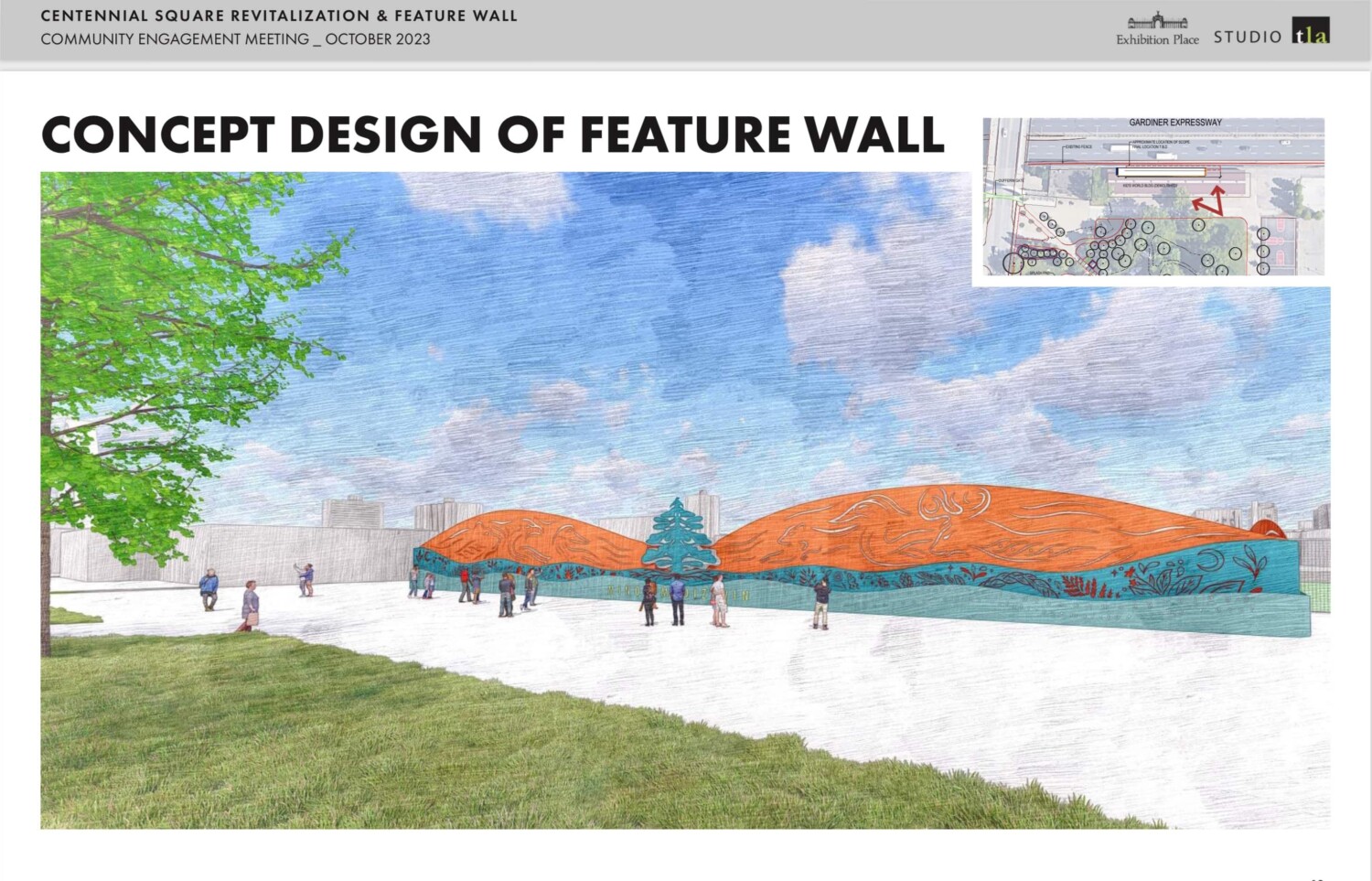
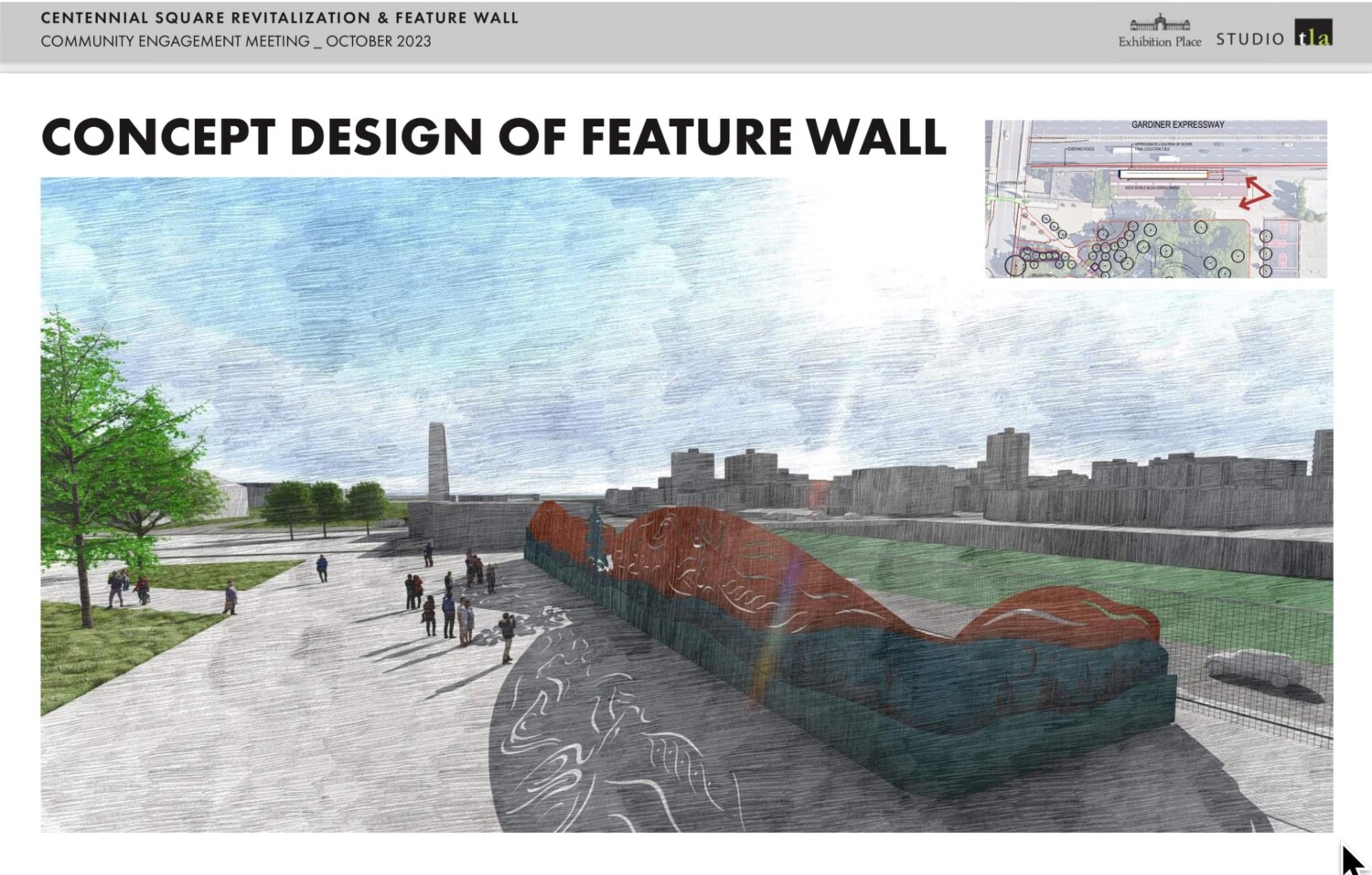
There was a recent public presentation of an iconic Artist-led feature wall art piece that symbolizes a genuine representation of Indigenous themes. The Treaty Holder First Nations Mississaugas of the Credit First Nation and August & Luke Swinson from Mississaugas of Scucog Island First Nation presented their concept design for the 40-metre-long proposed feature wall – just inside the Dufferin Gates on the east side.
Something is finally happening at 11 Brock Ave.
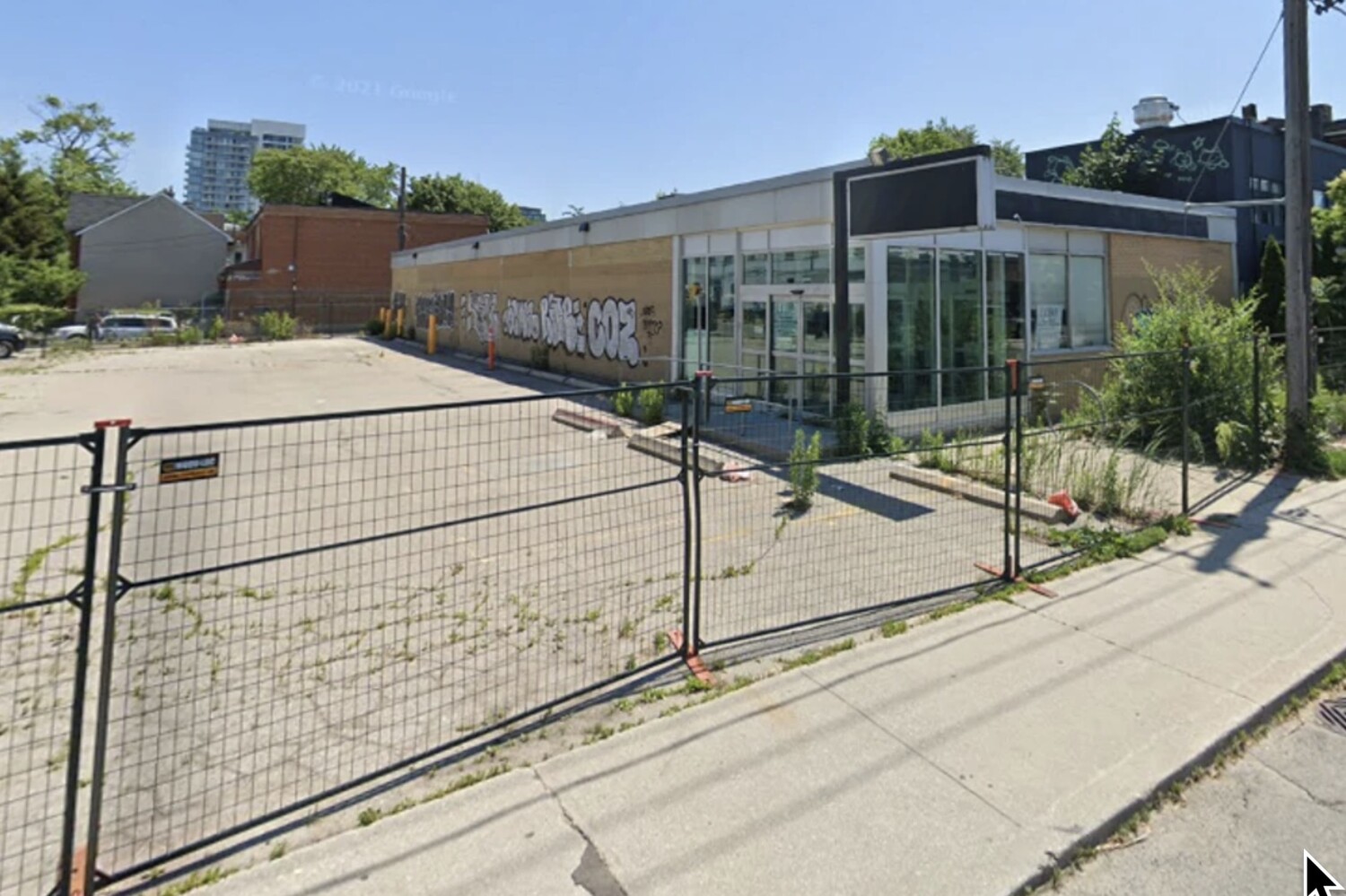
The City will develop 11 Brock Avenue, the former site of an LCBO just north of Queen Street West, into a 40-unit rent-geared-to-income supportive housing development.
Read more about it here – https://storeys.com/toronto-first-city-development-site-11-brock/
Ex Place Transportation & Pedestrian Study – Nov. 7
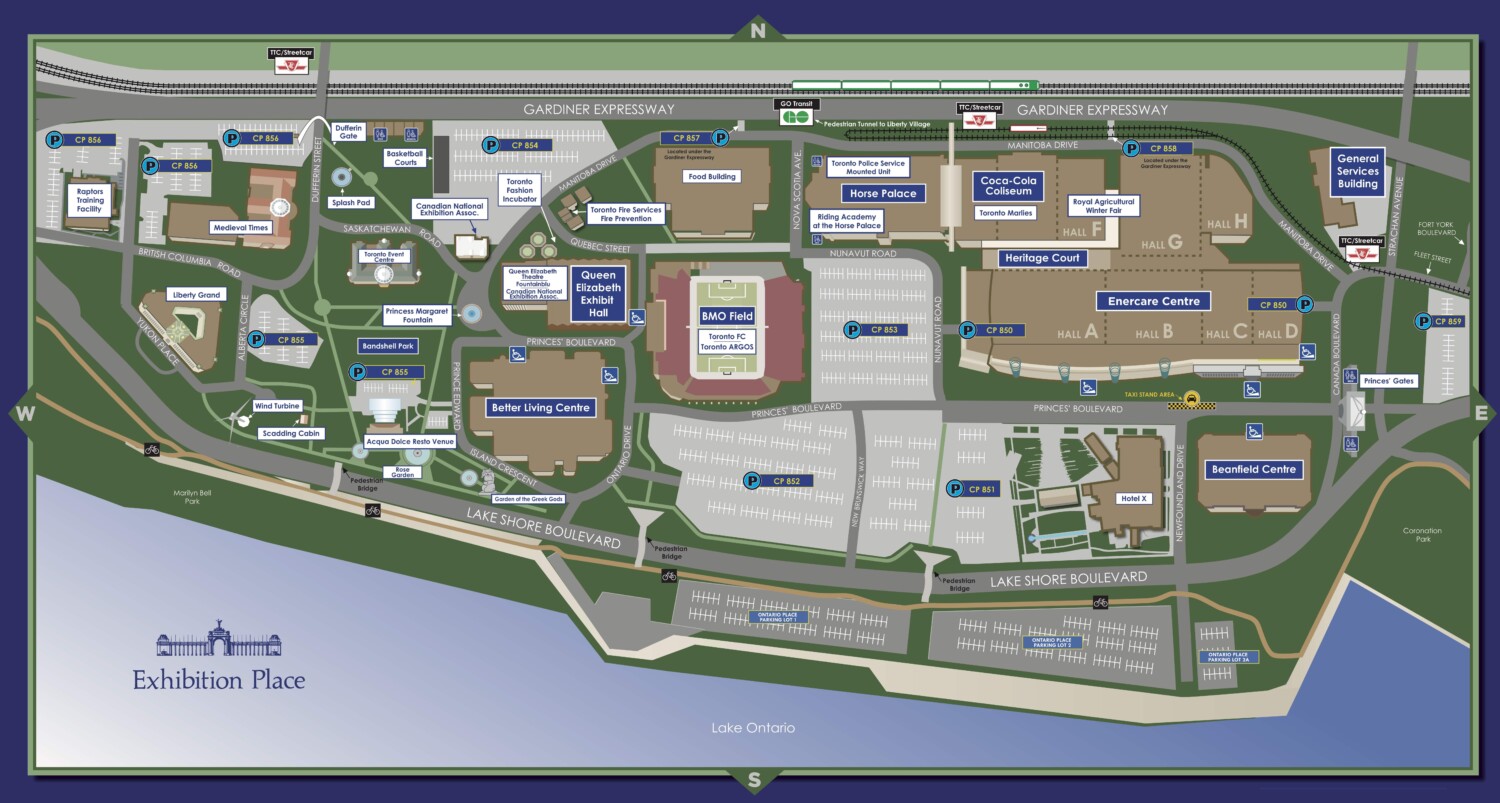
Exhibition Place and the City of Toronto have retained the engineering and professional services firm WSP to conduct a Transportation and Pedestrian study. The intent at this virtual meeting is to have WSP gather community feedback in developing the plan.
Date: Tuesday, November 7th, 2023
Time: 6:30 – 8:00 PM
Join Zoom Meeting
https://us06web.zoom.us/j/84640948121?pwd=6LlugrSmO6SF5LLDLT5NBp1WGAPaq8.1
Meeting ID: 846 4094 8121
Passcode: 0
Dial by your location
• +1 647 374 4685 Canada
• +1 647 558 0588 Canada
Please keep your microphone muted during the meeting, until the floor is opened for questions.
Milky Way Garden Potluck – Oct. 19
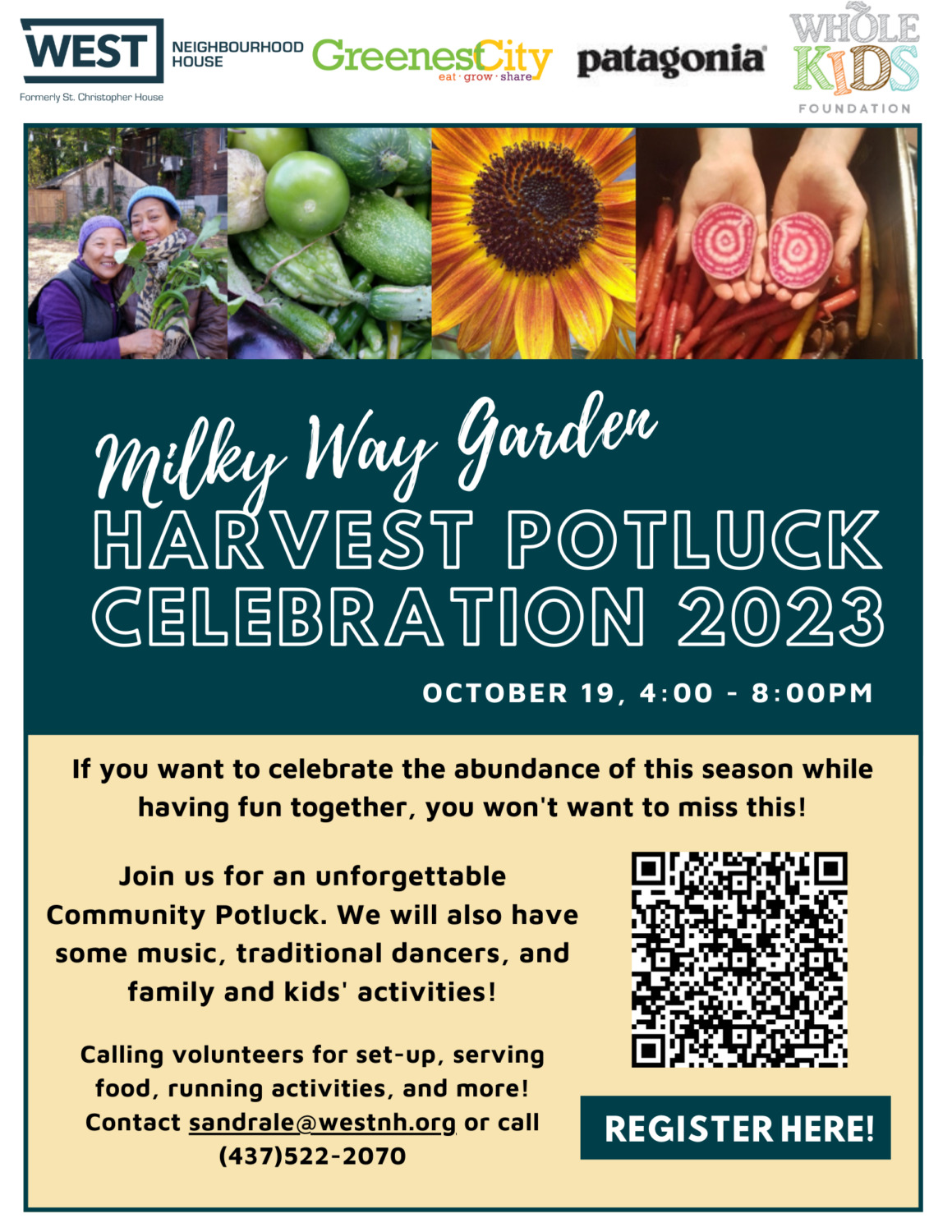
As fall has already approached, Greenest City is pleased to invite you all to their Traditional Harvest Potluck in the Milky Way Garden on Thursday, October 19, from 4:00 p.m. to 8:00 p.m. (behind the Parkdale Library on Milky Way Lane). This is an opportunity to come together to celebrate the bountiful gifts we received during this wonderful season.
This year they will have a very special program that will include:
- Indigenous ceremony
- Guiding tour to the gardens by our special invitees “the Monarch Butterfly performers”
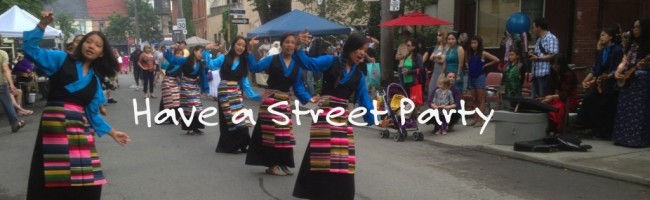
- Traditional dancers of Tibet
- Local musicians
- Harvesting dances by Aztec indigenous people
- Truth and Reconciliation activities
- Free art creation station
- Kids and family Eco-workshops
- Community raffles
- Campfire for ALL to drink delicious Hot Chocolate while roasting marshmallows. We are also looking for volunteers to help bring this amazing event to life! Please let them know if you want to be part of the Harvest Volunteer team.
Listen to food stories and memories and taste delicious cultural dishes. Please join and bring your unique recipe to add some Luck to the Communal Pot. 🙂
Please let them know if you will be coming by registering using this form or by email – sandrale@westnh.org.
Your confirmation is very important to them so they will make sure they will have enough warm soup and hot chocolate when you arrive 🙂
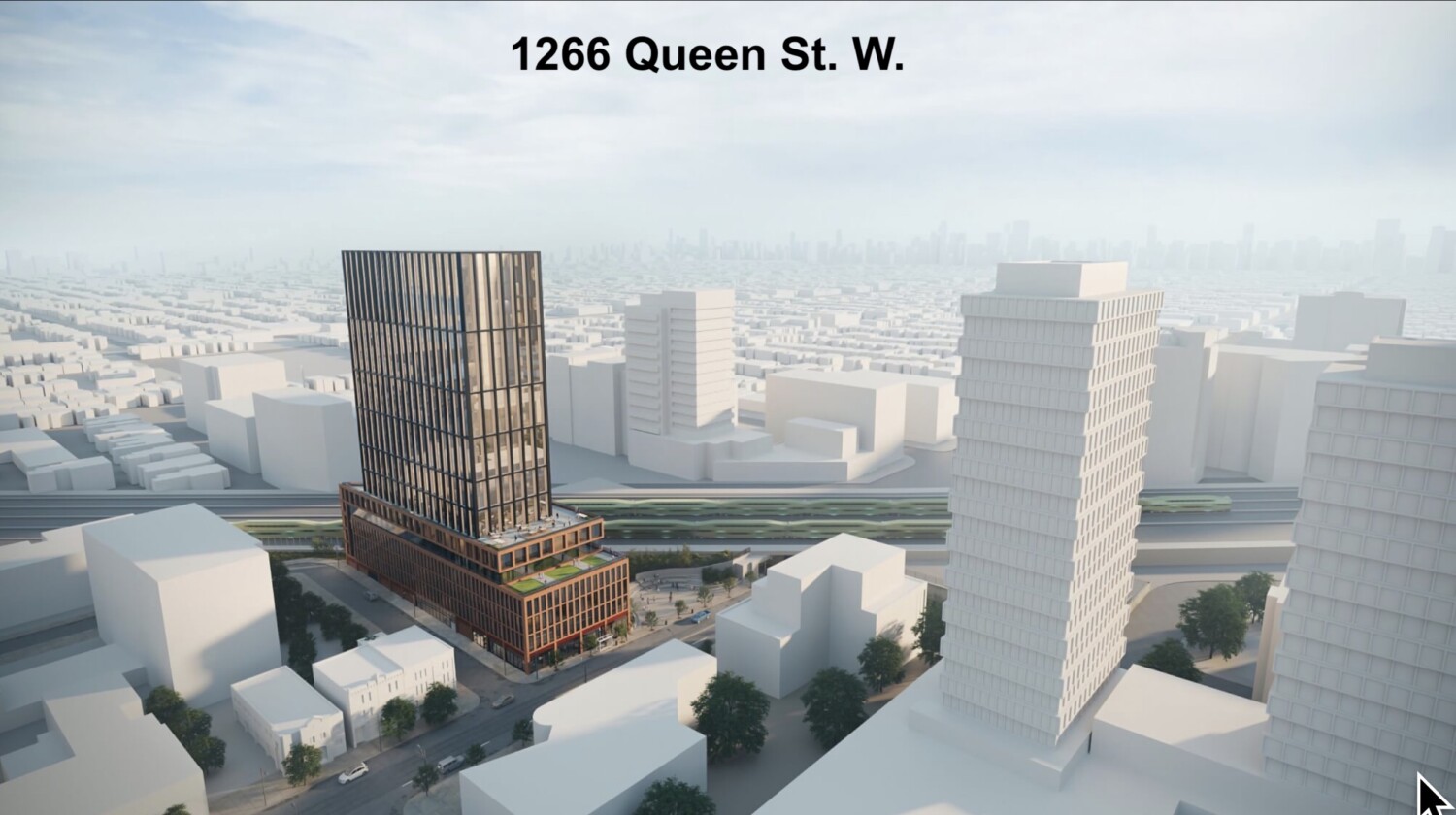
1437-1455 Queen St. W. & 1266 Queen St. W. – Virtual Community Consultation Meetings – Oct. 10
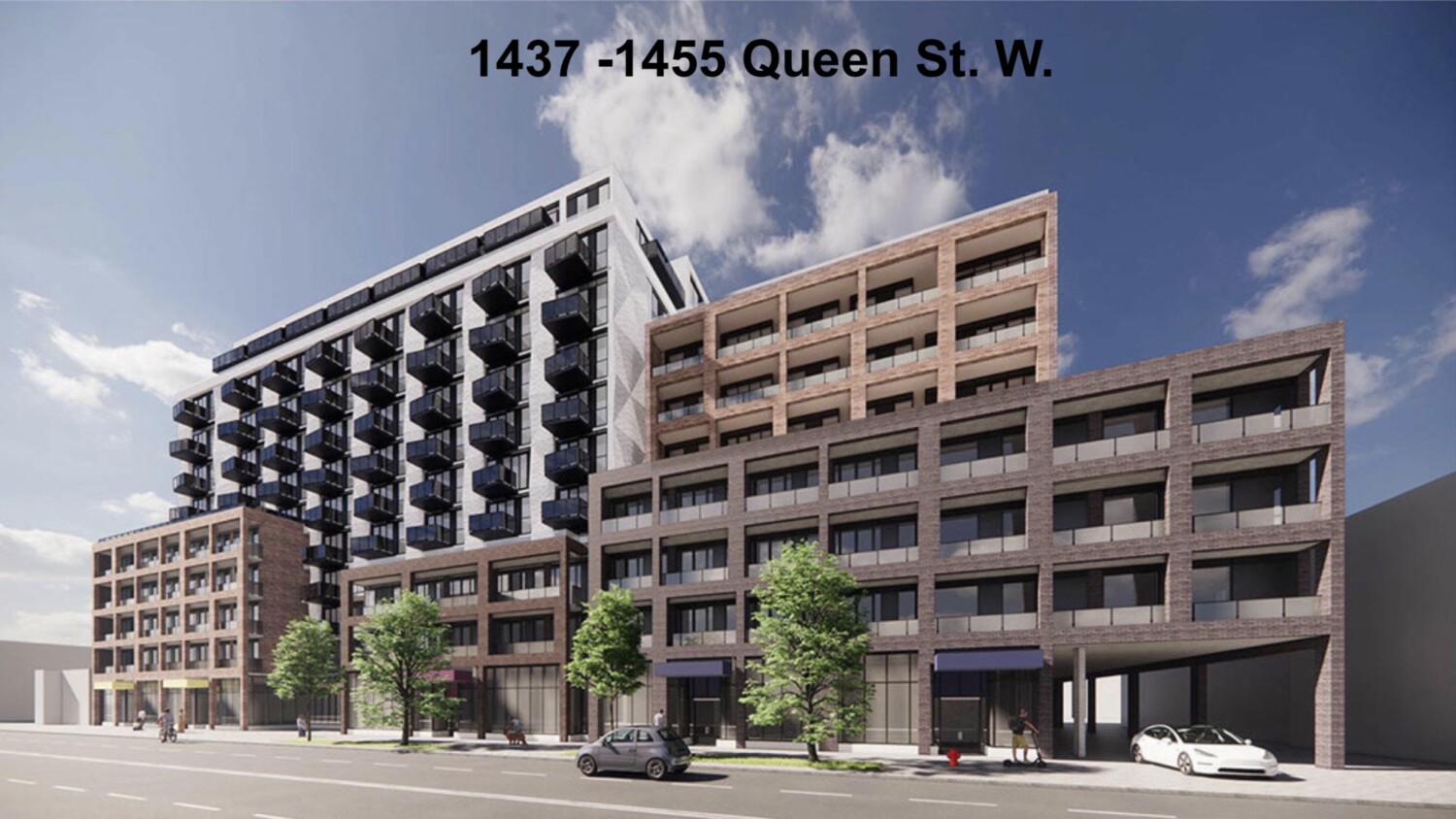
The application proposes a 12-storey mixed-use building. The submitted drawings and materials can be accessed at www.toronto.ca/1437QueenStW.
A second re-zoning application has been submitted for 1266 Queen St West
A re-zoning application has been submitted for 1437 – 1455 Queen St West
This application proposes a 25-storey mixed-use building. The submitted drawings and materials can be accessed at www.toronto.ca/1266QueenStW.
To allow you to learn more about the application, ask questions, and gather feedback, City Planning will be holding a Virtual Community Meeting on Tuesday, October 10th, 2023, from 6 – 8 PM.
We will discuss the applications as follows:
Introduction & Policy Overview: 6:00 pm – 6:15 pm
1437-1455 Queen Street West: 6:15 pm – 7:05 pm
1266 Queen Street West: 7:05pm – 8:00pm
Register to attend the virtual community meeting at: https://www.toronto.ca/community-people/get-involved/public-consultations/city-planning-consultations/